• Germany
    • Germany
    • Netherlands
    • Central Eastern Europe
    • France
    • Italy
    • Spain
    • United Kingdom
  • DE
  • EN
  • Services
    • Project Development
    • Investment Management
    • Real Estate Management
    • Portfolio Management
  • Project developments
  • Premises
  • ESG
  • Research
  • Recently
    • Topics
    • News
    • Download-Center
  • Contact
  • GARBE World
  • DE
  • EN
    • Germany
    • Netherlands
    • Central Eastern Europe
    • France
    • Italy
    • Spain
    • United Kingdom
    Germany
Topics 01/04/2026

Focus on Climate Change Risks: Their Implications for Logistics Real Estate, Financing and Insurance

Logistics real estate is increasingly exposed to physical climate change risks.

Extreme weather events and rising sea levels threaten locations, supply chains and infrastructures. At the same time, growing regulatory and market pressures force banks, insurance companies and investors to make climate resilience an integral part of their site and investment criteria. 


Key Takeaways: 

  • Physical climate change risks can impact logistics sites, supply chains and real estate equity even today. Extreme weather may compromise functionality, increase maintenance costs and cause operational interruptions. 
  • Insurability and financing are becoming key levers: The increase in climate-related damage is prompting higher insurance premiums, tighter conditions and possibly an eventual refusal to cover certain risks at all. Banks in particular have begun to integrate physical risks in their stress tests and loan approval processes. The downstream consequence could be that heavily exposed logistics properties become subject to much stricter insurance and financing conditions or altogether ineligible for underwriting in the eyes of insurers and lenders. 
  • Yet despite their high exposure, many companies still lack systematic climate change mitigation strategies: Costs, data gaps and absent standards are deemed the main obstacles. Meanwhile, the pressure to act is mounting for the logistics real estate industry. Climate resilience should be anchored in planning, approval and portfolio management processes – coordinated with municipalities, insurance companies and financiers.  
  • As it is, GARBE has operationally anchored climate resilience in its corporate practice already: The company subjects each asset to a climate risk analysis, which is then integrated into ESG and certification processes. Moreover, it systematically appraises risks and mitigates them through pinpoint measures to adapt a given asset accordingly. Transparent reporting, close coordination with banks and insurance companies and the application of benchmarks like GRESB all help to secure viable financing and insurance terms. 

Climate Change Risks as Locational Factor for Logistics Real Estate 

Due to its dependence on functioning transport networks and infrastructures, the logistics industry is exposed to the consequences of climate change more than others. Extreme weather events like storms, heavy rain, floods and heat waves affect access routes, storage facilities and transshipment infrastructure while also disrupting supply chains and increasing maintenance costs. The damage wrought by natural disasters is going up steadily and can no longer be ignored (see Figure 1). Surveys have revealed: Two out of three companies already noted resource shortages and disrupted supply chains, with one in two reporting damages to buildings and roads – which means that physical climate risks represent a pressing operational issue.[1] 

Just how severely logistics real estate is affected depends chiefly on a given site and its layout. Intense soil sealing aggravates the risks of flooding and heat while municipal governments increasingly prescribe climate-adjusted planning and construction via their local development plans. At the same time, short-sighted business logic and high capital expenditure requirements tend to impede proactively implemented mitigation measures. Instead, such measures are often delayed until insurance companies, banks or authorities explicitly demand them. 

Note: During the first half of 2025, natural disasters caused c. USD131 billion worth of damage – of which 60% was not covered by insurance. 

Insurability and Financing: Who Covers the Climate Risk? 

In light of the growing damage caused by climate change, risk ownership among the real estate sector, insurance companies and banks is shifting (see Figure 2). For assets in particularly exposed locations, the threat of being rated as difficult or impossible to insure is becoming a reality – with direct consequences for their funding eligibility, profitability and fungibility. Insurance companies are responding to elevated damage amounts and vague forecasts by raising premiums, tightening conditions, increasing deductibles and, in extreme cases, by pulling out of high-risk regions. 

For banks, physical climate risks have evolved from a secondary long-term issue into a factor clearly relevant in their underwriting practice. Site exposure, structural resilience and insurability are moving into focus alongside the traditional credit rating metrics. This may lead to more restrictive conditions, higher capital adequacy requirements or the outright rejection of projects in high-risk locations. At the same time, the dovetailing of financing and insurance—for instance through insurance coverage requirements and risk transfer to the capital market—further increases the complexity of risk distribution while making transparency in climate risk management one of the decisive competitive factors. 
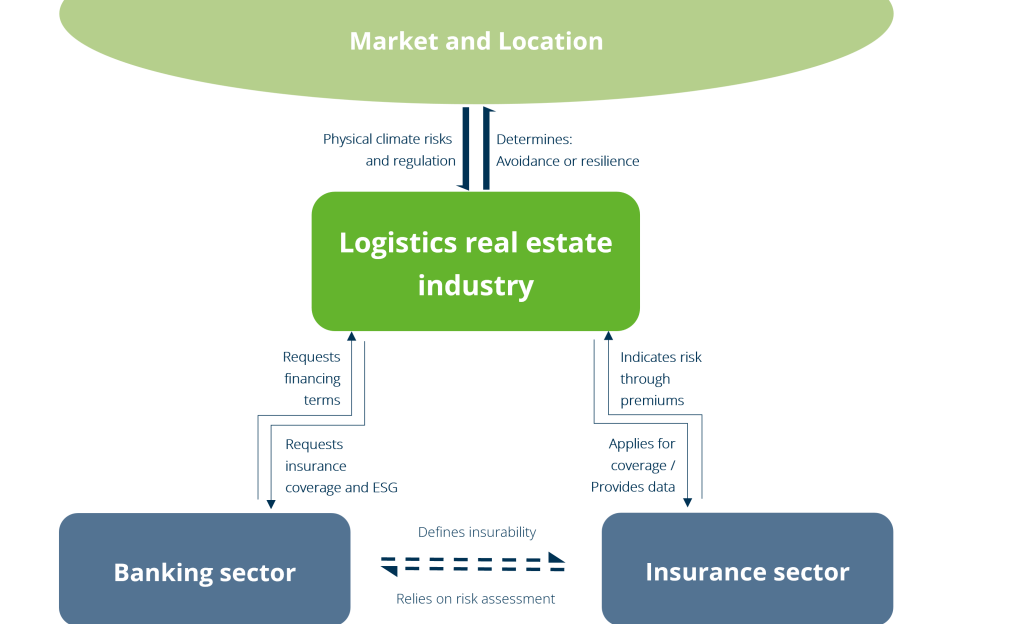
Figure 2: Interaction diagram on physical climate risks

Source: proprietary chart, GARBE ESG

Between Mandatory and Optional: Climate Change Mitigation Strategies and Regulatory Efforts 

Regulatory specifications increase the pressure to manage climate risks in a structured manner. Insurance companies are calling for climate-adjusted planning, construction and refurbishment, a construction ban in high-risk flood areas and compulsory climate risk assessments, whereas supervisory authorities expect banks to integrate climate-related threats in their risk and capital planning. Most institutes have by now added physical risks to their stress tests, and yet data gaps and uncertain assessment aspects remain. 

For the real estate industry, systematic climate change mitigation strategies are becoming the precondition for stable business models. Central instruments include vulnerability analyses that rate the exposure, sensitivity and adaptability of a given site, and their findings are used as basis for investment decisions, property strategies and redevelopment planning. They provide transparency in regard to risky assets and resilient sites – and are therefore equally useful to banks, investors and insurance companies as they adapt their terms, capital allocation and portfolio management to climate risks. 

How does GARBE Industrial Address Climate Change Risks? 

GARBE takes climate change risks into account within the scope of its ESG activities, and started commissioning third-party climate risk analyses for its assets years ago. These analyses are firmly integrated into our ESG software: For any asset managed by GARBE, a site-specific climate risk assessment can be generated which may then be used to identify potential risks and to review possible mitigation measures. This way, the portfolio management stays up to date on climate-related opportunities and risks. 

At the same time, GARBE keeps in touch with insurance and finance partners to recognise market dynamics such as premiums, conditions and regulatory requirements as soon as they emerge, and to ensure that the strategy takes them into account. The approach is complemented by the company’s adherence to leading ESG benchmarks such as GRESB, which communicates the progress made in climate risk management to the outside world. 

  • Data-based climate risk management: The use of location and climate data in the ESG software or in the context of sustainability certification processes like DGNB permits a structured assessment of the exposure of existing sites and development sites. 
  • Resilient development and inventory optimisation: Development planning takes account of aspects like soil unsealing, green areas and retention surfaces as well as structural and technical protective measures. Mitigation measures within the portfolio are reviewed and implemented depending on the property and its risk profile. 
  • Transparency for investment and insurance partners: Having set up reporting structures to cover physical climate risks and potential resilience measures as well as the use of market standards (e.g. GRESB), GARBE is able to make relevant information about climate-related risks available in structured form to its investors and insurance partners. Aside from the existing assessment of physical climate change risks, we intend to conduct standardised vulnerability analyses in accordance with the EU Taxonomy requirements in the longer term. 

Conclusion: 

Climate change risks are rapidly gaining in significance for the logistics real estate sector and increasingly influence aspects like site selection, asset strategy, insurability and financing. Extreme weather, potentially higher upkeep costs and tighter regulations could heighten the risk of damage, impairments and rent discounts. 

For owners, developers, investors, insurers and banks, this means: Climate resilience should be integrated in a data-driven and site-specific form into the planning, approval, funding and operation of logistics real estate early on. Taking an integrative approach that consistently synchronises site-specific exposure, structural adaptability, insurability and regulatory requirements will enable you to contain your risks and simultaneously to seize opportunities, e.g. in the form of better financing conditions and a superior position when competing for tenants, capital and land. 

[1] THB maritime daily, 2024. Branche spürt die Klimarisiken KPMG und BVL befragen Entscheider in Schifffahrt und Logistik – Wandel wahrnehmbar. https://www.thb.info/rubriken/maritime-wirtschaft/detail/news/branche-spuert-die-klimarisiken.html 
[2] Proprietary chart: Munich Re 2025. Waldbrände und extreme Unwetter: Naturkatastrophen in den USA dominieren Schadenbilanz des 1. Halbjahres 2025. Waldbrände und extreme Unwetter: Naturkatastrophen in den USA dominieren Schadenbilanz des 1. Halbjahres 2025 | Munich Re

Sign up for our newsletter:

Sign up


  • +49 40 35 61 3-0
  • +49 40 35 61 3-2810
  • info@garbe.de


  • GARBE World
  • Privacy policy
  • Imprint
  • Contact

GARBE Industrial GmbH & Co. KG | Versmannstraße 2 | D-20457 Hamburg

xing linkedin facebook instagram
Your privacy

We use cookies on our site. Some of them are essential, while others help us to improve this website and to show you personalised advertising. You can either accept all or only essential cookies. To find out more, read our privacy policy and cookie policy. If you are under 16 and wish to give consent to optional services, you must ask your legal guardians for permission. We use cookies and other technologies on our website. Some of them are essential, while others help us to improve this website and your experience. Personal data may be processed (e.g. IP addresses), for example for personalized ads and content or ad and content measurement. You can find more information about the use of your data in our privacy policy. You can revoke or adjust your selection at any time under Settings.

Your privacy

I accept all cookies

Save settings

Cookie preferences

Cookie-details Privacy statement Imprint

Privacy settings

If you are under 16 and wish to give consent to optional services, you must ask your legal guardians for permission. We use cookies and other technologies on our website. Some of them are essential, while others help us to improve this website and your experience. Personal data may be processed (e.g. IP addresses), for example for personalized ads and content or ad and content measurement. You can find more information about the use of your data in our privacy policy. This is an overview of all cookies used on this website. You can either accept all categories at once or make a selection of cookies.

I accept all cookies Save settings

Back

Privacy settings

Essential cookies are needed to provide you with the services you requested. Those cookies store session informations - for example your pirvacy settings.

Show cookie-information Hide cookie-Information

Name
Provider Eigentümer dieser Website, Imprint
Purpose Speichert die Einstellungen der Besucher, die in der Cookie Box von Borlabs Cookie ausgewählt wurden.
Cookie Name borlabs-cookie
Cookie Expiry 1 Jahr

Marketing-Cookies are used to personalize advertisement from publisher and socia-media plattforms. Those cookies allow cross-domain tracking.

Show cookie-information Hide cookie-Information

Accept
Name
Provider LinkedIn
Purpose Marketing
Privacy Policy https://www.linkedin.com/help/linkedin/answer/87150/linkedin-marketing-solutions-und-die-datenschutz-grundverordnung-dsgvo-?lang=de
Accept
Name
Provider Google Ireland Limited, Gordon House, Barrow Street, Dublin 4, Ireland
Purpose Cookie from Google for website analyses. Generates statistical data on how the visitor uses the website.
Privacy Policy https://policies.google.com/privacy?hl=de
Cookie Name _ga,_gat,_gid
Cookie Expiry 2 years

Cookies for external media. If blocked we can not provide you with content from external media, like You Tube Videos, Google Maps or social media content.

Show cookie-information Hide cookie-Information

Accept
Name
Provider Meta Platforms Ireland Limited, 4 Grand Canal Square, Dublin 2, Ireland
Purpose Wird verwendet, um Facebook-Inhalte zu entsperren.
Privacy Policy https://www.facebook.com/privacy/explanation
Host(s) .facebook.com
Accept
Name
Provider Google Ireland Limited, Gordon House, Barrow Street, Dublin 4, Ireland
Purpose Cookie by Google used to control advanced script and event handling.
Privacy Policy https://policies.google.com/privacy?hl=en
Cookie Name _ga,_gat,_gid
Cookie Expiry 2 Years
Accept
Name
Provider Google
Purpose Integrates the Google Webfont service
Privacy Policy https://policies.google.com/privacy%20/
Accept
Name
Provider Mapbox
Accept
Name
Provider Google Ireland Limited, Gordon House, Barrow Street, Dublin 4, Ireland
Purpose Used to unlock Google Maps content.
Privacy Policy https://policies.google.com/privacy
Host(s) .google.com
Cookie Name NID
Cookie Expiry 6 Monate
Accept
Name
Provider Meta Platforms Ireland Limited, 4 Grand Canal Square, Dublin 2, Ireland
Purpose Used to unlock Instagram content.
Privacy Policy https://www.instagram.com/legal/privacy/
Host(s) .instagram.com
Cookie Name pigeon_state
Cookie Expiry Sitzung
Accept
Name
Provider Openstreetmap Foundation, St John’s Innovation Centre, Cowley Road, Cambridge CB4 0WS, United Kingdom
Purpose Used to unlock OpenStreetMap content.
Privacy Policy https://wiki.osmfoundation.org/wiki/Privacy_Policy
Host(s) .openstreetmap.org
Cookie Name _osm_location, _osm_session, _osm_totp_token, _osm_welcome, _pk_id., _pk_ref., _pk_ses., qos_token
Cookie Expiry 1-10 Jahre
Accept
Name
Provider Twitter International Company, One Cumberland Place, Fenian Street, Dublin 2, D02 AX07, Ireland
Purpose Used to unblock Twitter content.
Privacy Policy https://twitter.com/privacy
Host(s) .twimg.com, .twitter.com
Cookie Name __widgetsettings, local_storage_support_test
Cookie Expiry Unbegrenzt
Accept
Name
Provider Vimeo Inc., 555 West 18th Street, New York, New York 10011, USA
Purpose Used to unblock Vimeo content.
Privacy Policy https://vimeo.com/privacy
Host(s) player.vimeo.com
Cookie Name vuid
Cookie Expiry 2 Jahre
Accept
Name
Provider Google Ireland Limited, Gordon House, Barrow Street, Dublin 4, Ireland
Purpose Used to unblock YouTube content.
Privacy Policy https://policies.google.com/privacy
Host(s) google.com
Cookie Name NID
Cookie Expiry 6 Monate

Privacy statement Imprint